After UPI, the Farm: Agriculture Is India’s Next DPI Revolution

India taught the world how to build digital public infrastructure. Payments came first. Agriculture is the next layer waiting to be built — and it follows the same proudly Indian playbook.
By Ishaan Bhatt · Contributing Writer, Digital Public Infrastructure
Few national achievements have given Indians more quiet pride than UPI — the moment the world stopped asking whether India could build frontier digital infrastructure and started asking how. That confidence is itself an asset of the Amrit Kaal. This article is about investing it where it will matter most: the farm.
Something remarkable happened in Indian finance over the last decade. A country long dismissed as a technology follower produced a payments system that much of the world now studies, envies, and imitates. UPI — processing billions of transactions every month, at population scale, at near-zero cost — did not merely digitise money. It created an open, interoperable public layer on which thousands of private applications compete and cooperate at once. When India showcased its DPI model to the world during its G20 presidency, the lesson it offered was not about payments. It was about architecture — and that lesson now applies directly to agriculture.
The DPI playbook
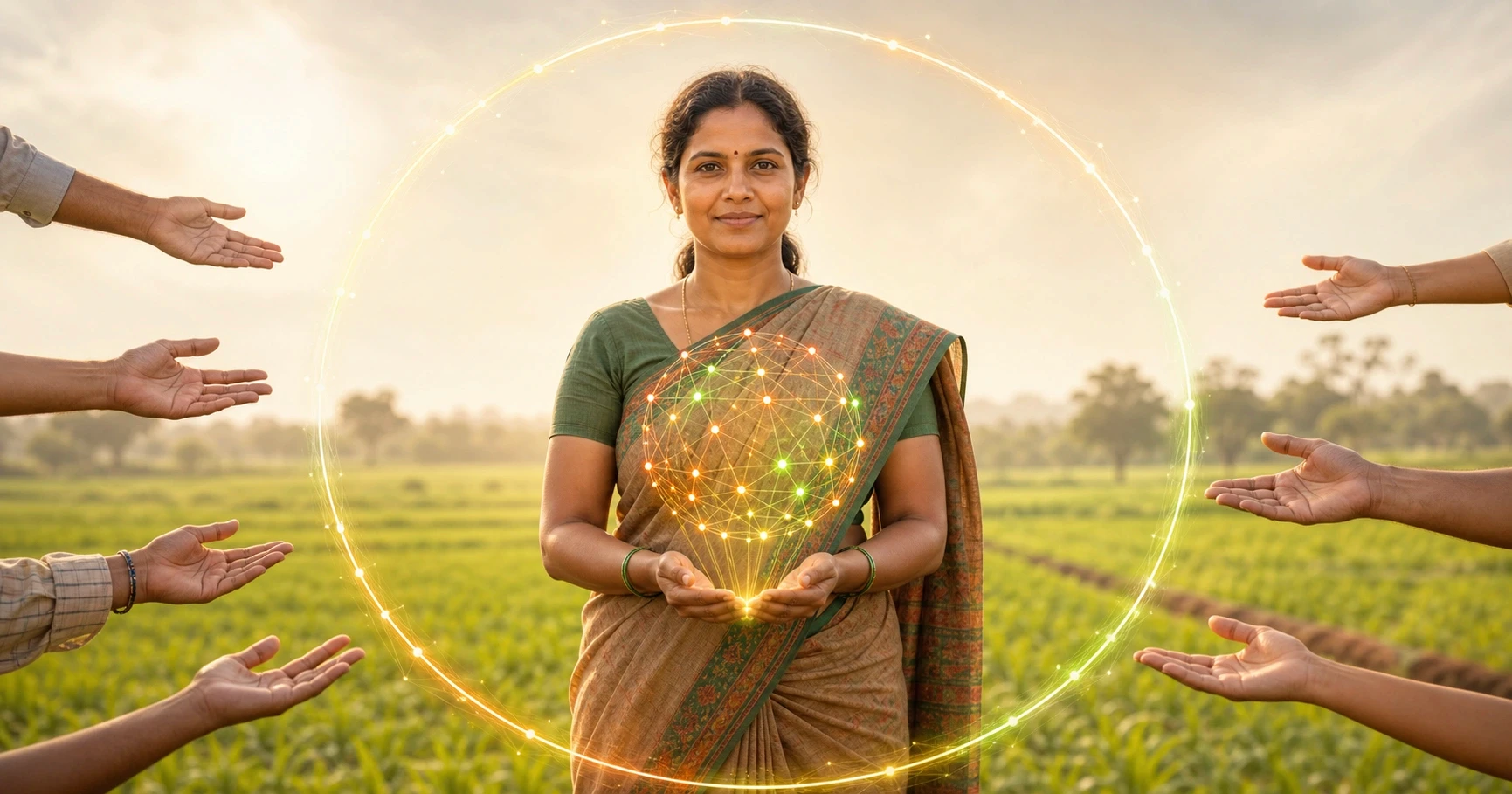
India’s digital public infrastructure works because of a repeatable pattern. The state, or a public-interest body, builds the shared rails — identity through Aadhaar, payments through UPI, consented data exchange — and holds them open. Private innovation then builds on top, competing on experience while interoperating through the common layer. No single company owns the rail; everyone can build on it; and the network effects accrue to the ecosystem — to the nation — rather than to a gatekeeper.
This inverts the platform logic of Silicon Valley, in which a dominant firm owns the rails and taxes everything that runs on them. DPI keeps the rails public and lets value concentrate in the services above. It is India’s distinctive contribution to digital economics: the scale benefits of a platform without the monopoly costs.
Why payments went first
Payments were the natural first domain: universal, high-frequency, simple to standardise. Their success established the template — and the national confidence. But payments were always meant to be the beginning. The same architecture applies to any domain where fragmentation imposes a coordination cost. Agriculture — with its dozens of disconnected services, its hundreds of millions of under-served participants, and its central place in national life — is the most consequential domain of all.
The rails are already being laid
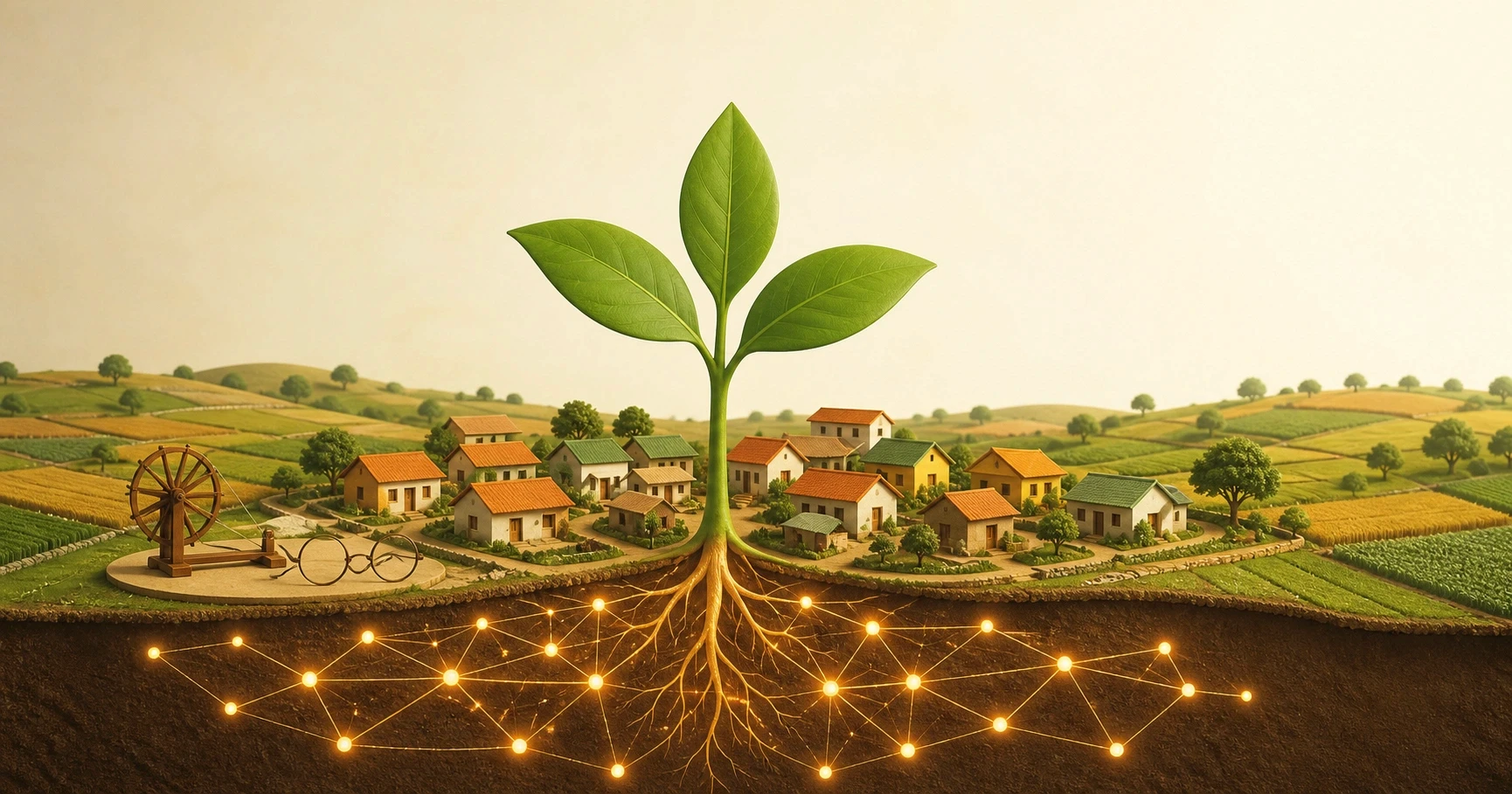
The agricultural equivalent of the payments rails is taking shape. AgriStack establishes verified farmer identity and consent-based access to farmer, land, and crop data. PM-KISAN has proven that direct benefit transfer can reach crores of farmer accounts. eNAM points toward unified market access. The DPDP Act, 2023 supplies the consent framework. Piece by piece, the public substrate is being assembled, exactly as it was for payments. The pace of this public effort deserves genuine appreciation: under the Digital Agriculture Mission approved in September 2024 with an outlay of about ₹2,817 crore, more than eight crore Farmer IDs have already been created against a target of eleven crore, the Digital Crop Survey has been carried out across some six hundred districts, and a further ₹6,000 crore in central assistance has been committed to help states complete their farmer registries and crop surveys. The Union Budget 2026 went so far as to describe AgriStack as a potential “next UPI” — a comparison the ecosystem should take both as encouragement and as a standard to live up to.
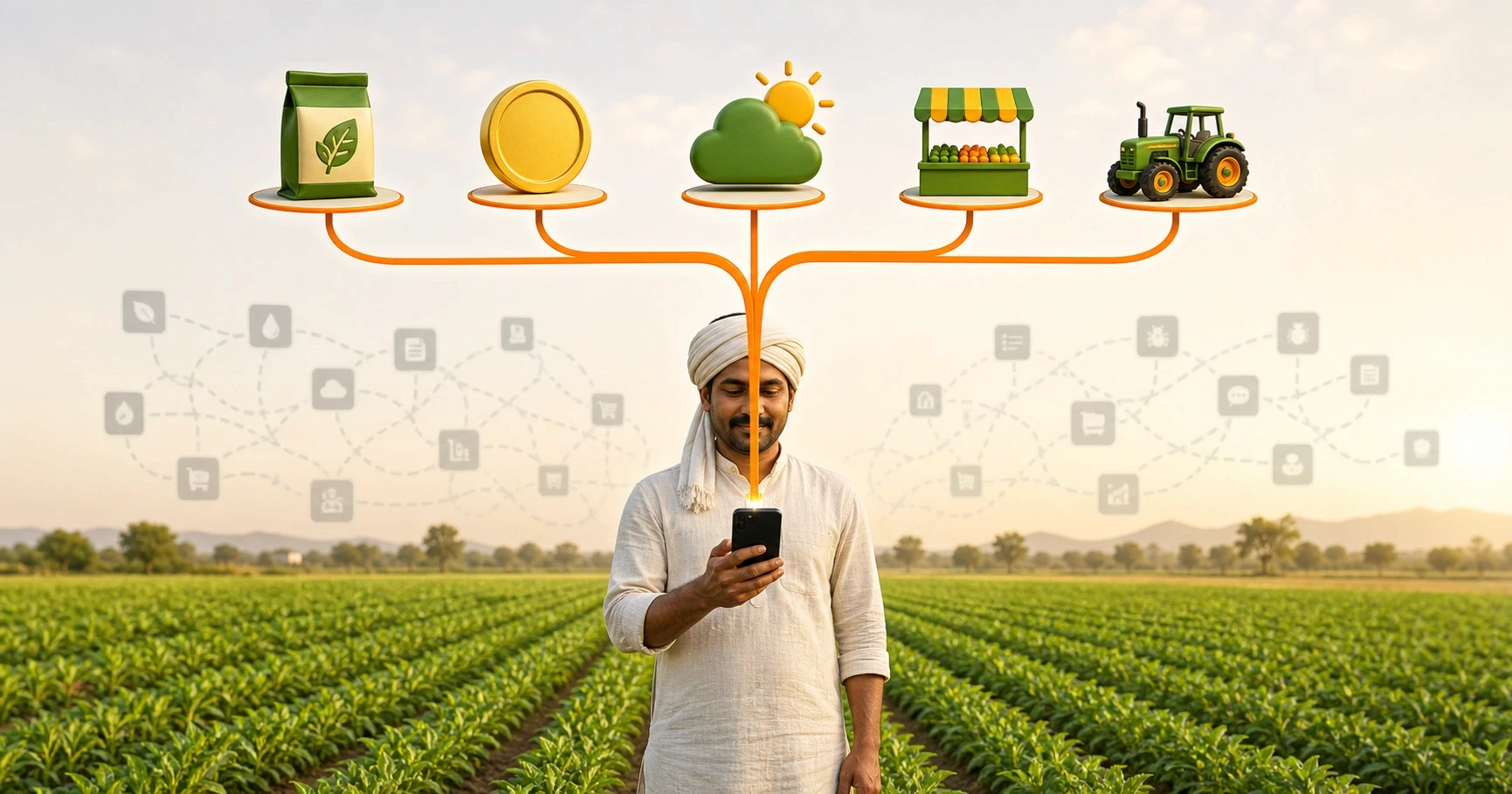
What payments had, and agriculture still lacks, is the layer that made the rails usable: the equivalent of the UPI apps that turned an interoperable protocol into something a chaiwala and a chartered accountant could both use in seconds. In agriculture, that means an operating layer that takes verified registry data and turns it into a scheme claimed, a loan disbursed, an insurance policy paid, a sale completed — for a farmer who may never have heard the word “API” and should never need to.
What the operating layer must get right
The playbook also specifies the standard. To be worthy of the rails it builds on, the agricultural operating layer must be open to the ecosystem rather than enclosing it; consent-first rather than extractive; vernacular rather than English-first; human-in-the-loop rather than blindly automated; and sovereign — Indian farmer data, on Indian infrastructure, under Indian law. These are the properties that made UPI a national asset rather than a private empire, and they are non-negotiable for agriculture, where the data is more sensitive and the users more vulnerable.
This is the standard Gramraj holds itself to: private innovation in the service of public infrastructure, the way India’s DPI story has always worked at its best.
The moment
Every layer of India’s digital stack looked improbable until it was inevitable. Identity at a billion-person scale was called impossible; then Aadhaar. Real-time payments for everyone were called premature; then UPI. Agriculture now stands where payments stood a decade ago: rails maturing, demand immense, the operating layer unbuilt.
The nation that built the first two layers is fully capable of building the third. After identity, after payments — the farm. That is the natural next chapter of India’s DPI story, and it may prove the most important one, because this time the beneficiary is the annadata on whom everything else depends.