Sovereign by Design: Caring for Farmer Data on Indian Infrastructure
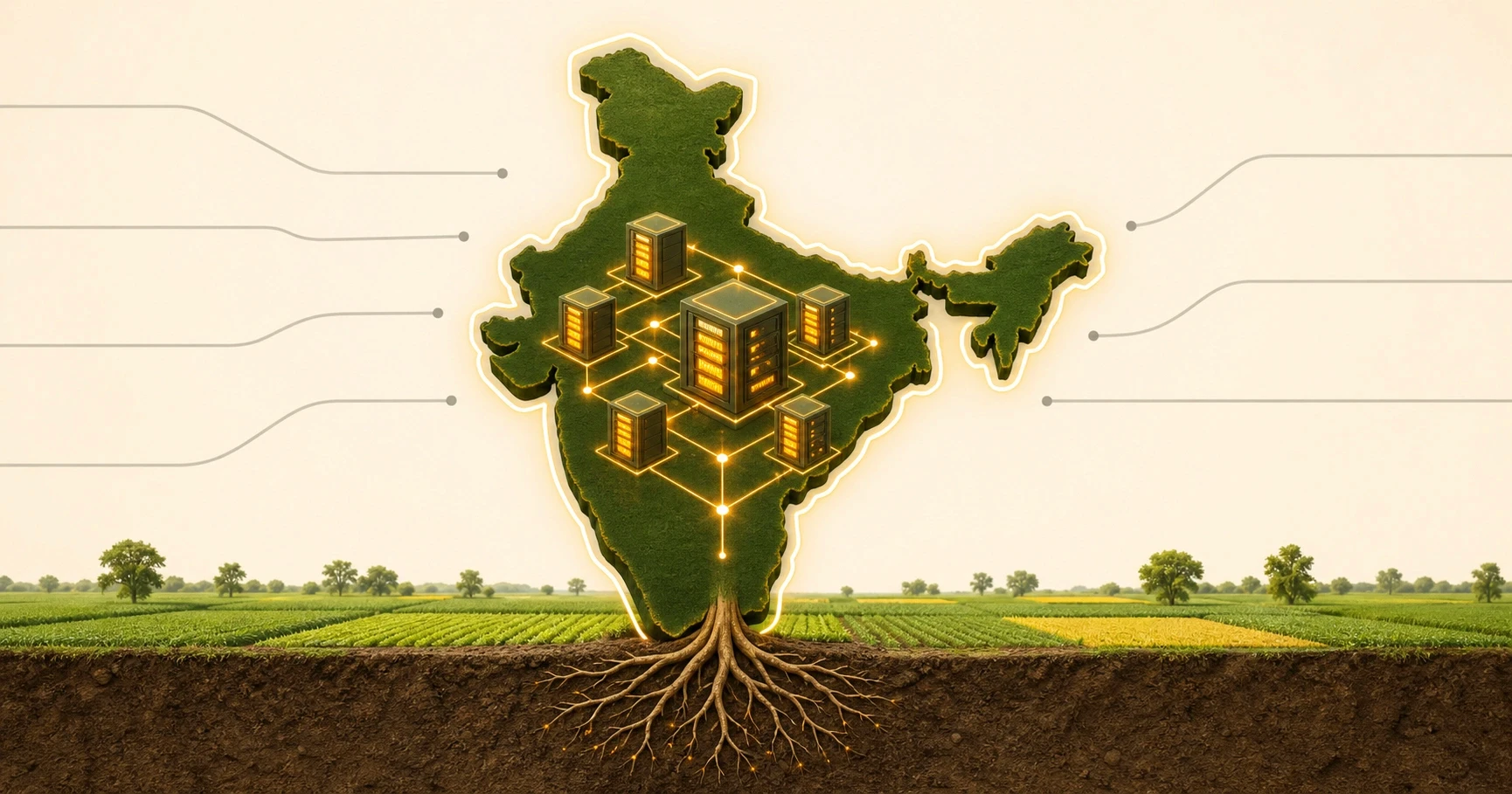
Every farmer record is strategic national data. Where it lives, and whose law governs it, is not an IT decision. It is a matter of careful national stewardship — and the government’s own frameworks already point the way.
By Arvind Krishnan · Contributing Writer, Public Infrastructure
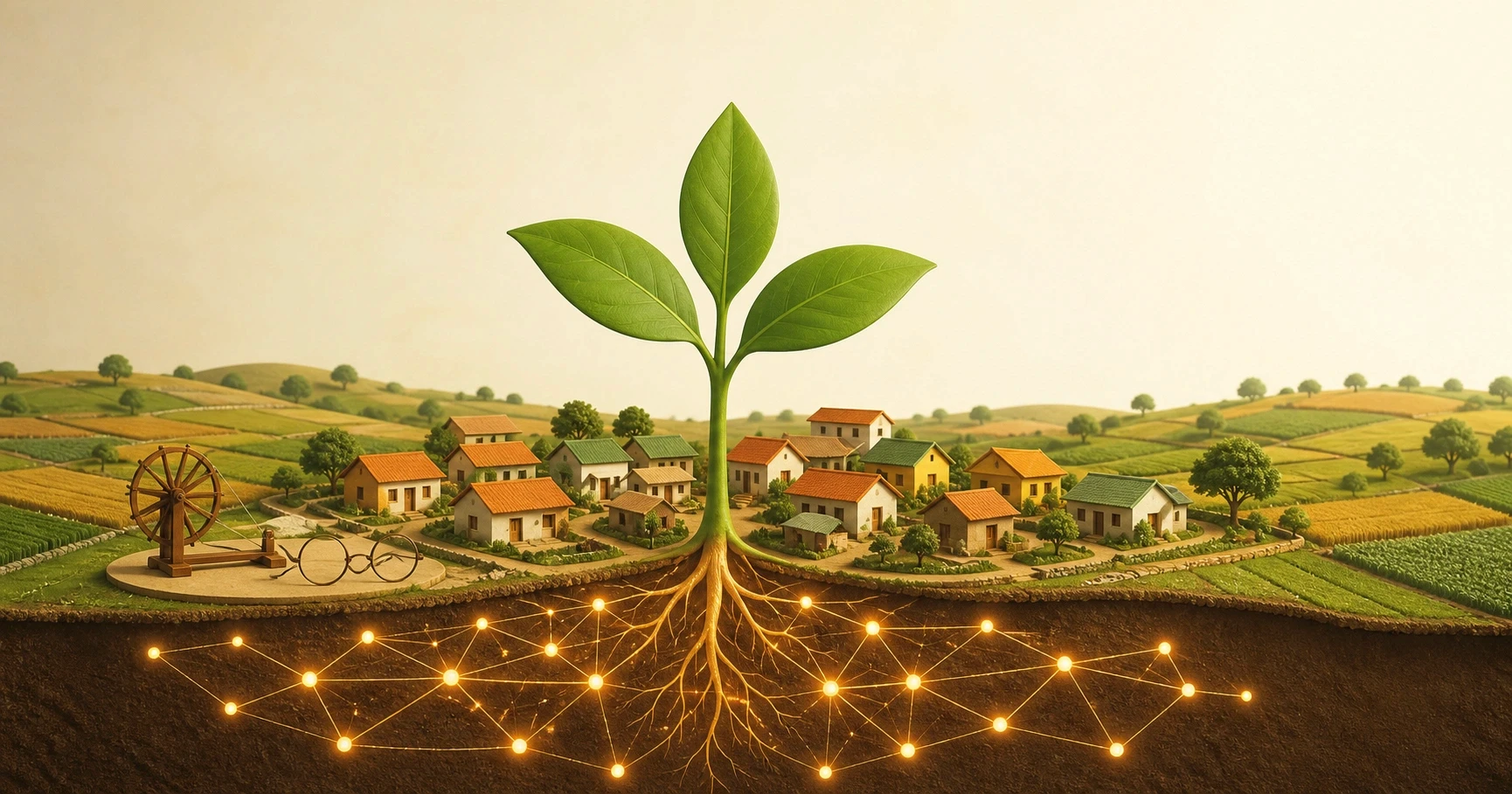
Among the quiet clarities of the Amrit Kaal is this: a nation’s data deserves the same considered care as any of its strategic assets. Swaraj, gently understood, extends to the digital realm — care and self-possession over the information that describes the nation’s land, harvests, and livelihoods. The government’s DPDP Act and AgriStack consent architecture already embody this principle; this article sets out what it asks of those who build alongside them.
Individually, a single farmer’s record can look mundane — a name, a plot, a crop, a location. In aggregate, the data describing crores of Indian farmers is one of the most strategically significant datasets the nation holds. It maps the country’s food production, its rural economy, its land, and the livelihoods of nearly half its workforce. Food security is national security; the data that describes the nation’s food system deserves to be treated with the same seriousness.
Data as national infrastructure
We are used to thinking of infrastructure as physical: roads, ports, power, grain silos. Data of this scale and sensitivity is infrastructure too. It underpins how the state understands and serves its agricultural economy, how markets function, and how future policy is made. Treated carelessly, it becomes a vulnerability; treated as the strategic asset it is, it becomes a quiet expression of self-reliance — not just in production, but in the information layer that supports production.
The implication is direct: strategic national infrastructure should not, by default, sit beyond the reach of national law. Aggregated farmer data is precisely the kind of asset a country should keep within its own jurisdiction and control.
Two ideas that are often confused
Clarity requires separating two concepts bundled together as “data sovereignty.”
The first is residency: where the data physically lives and is processed. Data resident in India is stored and handled within the country’s borders, on infrastructure subject to Indian oversight.
The second is control: who owns the data and whose law governs access to it. Control asks not merely where the bytes sit, but who must answer, and to whose authority, when someone requests them.
The strongest position combines both. Farmer data should be resident in India and governed by Indian law and consent — the farmer owning her data, and the nation retaining jurisdiction over it. Residency without control is incomplete; control without residency is fragile. Sovereign by design means both.
The jurisdiction question, made concrete
The stakes become concrete at the point of a request for data. When data resides under a foreign jurisdiction, the entity holding it may be compelled to act under laws other than India’s, and disputes over access are resolved under another country’s authority. Imagine, practically: a foreign court or agency ordering disclosure of the crop patterns, landholdings, and credit exposure of the farmers of an entire Indian state. For ordinary consumer data, reasonable people weigh trade-offs. For a dataset describing the agricultural backbone of the nation — its harvests, its vulnerabilities, its food security posture — the sensible default is that Indian farmer data answers to Indian law.
This is not an argument against global technology, and it is not isolationism. It is the same principle every serious nation applies to its strategic assets. The two positions are easily reconciled by building so that the farmer-facing operating layer and its data remain under Indian jurisdiction, whatever technologies are used beneath.
Building sovereign by design
Sovereignty of this kind cannot be added later; it must be an architectural commitment from the start. For Gramraj, that means farmer data is owned by the farmer, held under consent, governed within India’s legal framework including the DPDP Act, 2023, and kept resident under Indian jurisdiction — on Indian infrastructure, auditable by Indian authorities, answerable to Indian courts. Sovereignty is not a marketing claim layered on top; it is a property of how the system is built.
Why government should care
For government, this is where a farmer operating layer becomes not just useful but strategically preferable. A system that keeps the nation’s farmer data resident, consented, and under Indian jurisdiction aligns the country’s most valuable agricultural dataset with the country’s own interests and laws. It means the infrastructure serving Indian farmers is accountable to India — not a convenience hosted elsewhere, but a capability built at home, accountable at home.
The farmer benefits from owning her data. The nation benefits from keeping it. Sovereign by design is how both are true at once — and how digital agriculture earns lasting trust rather than creating a new dependency.