FPOs as Bharat’s Last Mile: Turning 10,000 Producer Organisations into a Delivery Network
Digital rails end where trust begins. In rural India, the last mile between a service and a farmer runs through an institution the nation has already built: the Farmer Producer Organisation.
By Raghav Kulkarni · Contributing Writer, Rural Economy
The Farmer Producer Organisation is one of independent India’s finest institutional ideas — cooperation, formalised; the collective strength of Gram Swaraj, given a modern legal form. The nation has invested in these institutions with vision, including the mission to promote 10,000 FPOs. This article is about honouring that investment: not building around the FPO, but building through it.
Every digital system for rural India eventually meets the same wall: the last mile. Rails can reach a village, an app can run on a phone, but adoption depends on trust, guidance, and a human presence the farmer already relies on. Technology alone rarely crosses that final gap. The institutions that can are the ones already embedded in the rural social fabric — and chief among them is the Farmer Producer Organisation, an institution India has deliberately cultivated, including through the national mission to form and promote 10,000 FPOs.
The last-mile problem
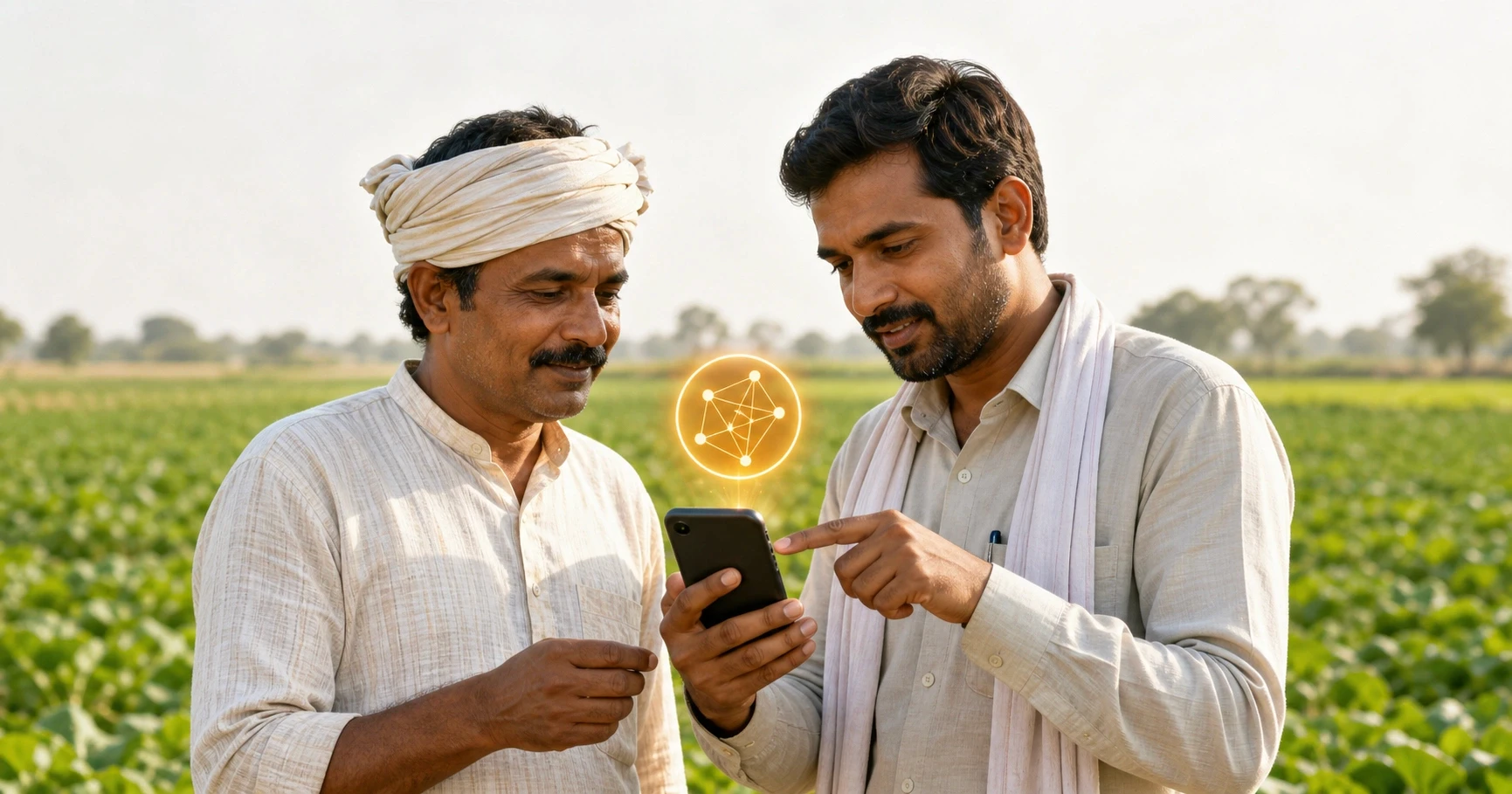
The last mile is not a distance problem; it is a trust problem. A farmer deciding whether to share her data, apply for credit, or adopt a new service is weighing an unfamiliar system against a lifetime of caution. A slick interface does not resolve that; a trusted intermediary does. This is why purely digital go-to-market strategies underperform in rural India. They assume trust that has to be earned, and they lack the human node that earns it. The last mile has to be walked by someone the farmer already walks with.
Why FPOs are the natural node
Farmer Producer Organisations are built for exactly this role. They aggregate farmers, they are trusted locally, they are owned by their members, and they already coordinate collective activity — inputs, aggregation, sale. They are the existing distribution and trust infrastructure of rural Bharat, assembled by farmers for farmers. An operating layer that reaches farmers through FPOs inherits a trust that would take years to build directly.
FPOs also solve the economics. Serving farmers one by one is expensive; serving them through an organisation that already aggregates hundreds of members turns costly individual outreach into efficient collective delivery. The FPO is both the trusted node and the efficient one.
Digitising the FPO — what it looks like on the ground
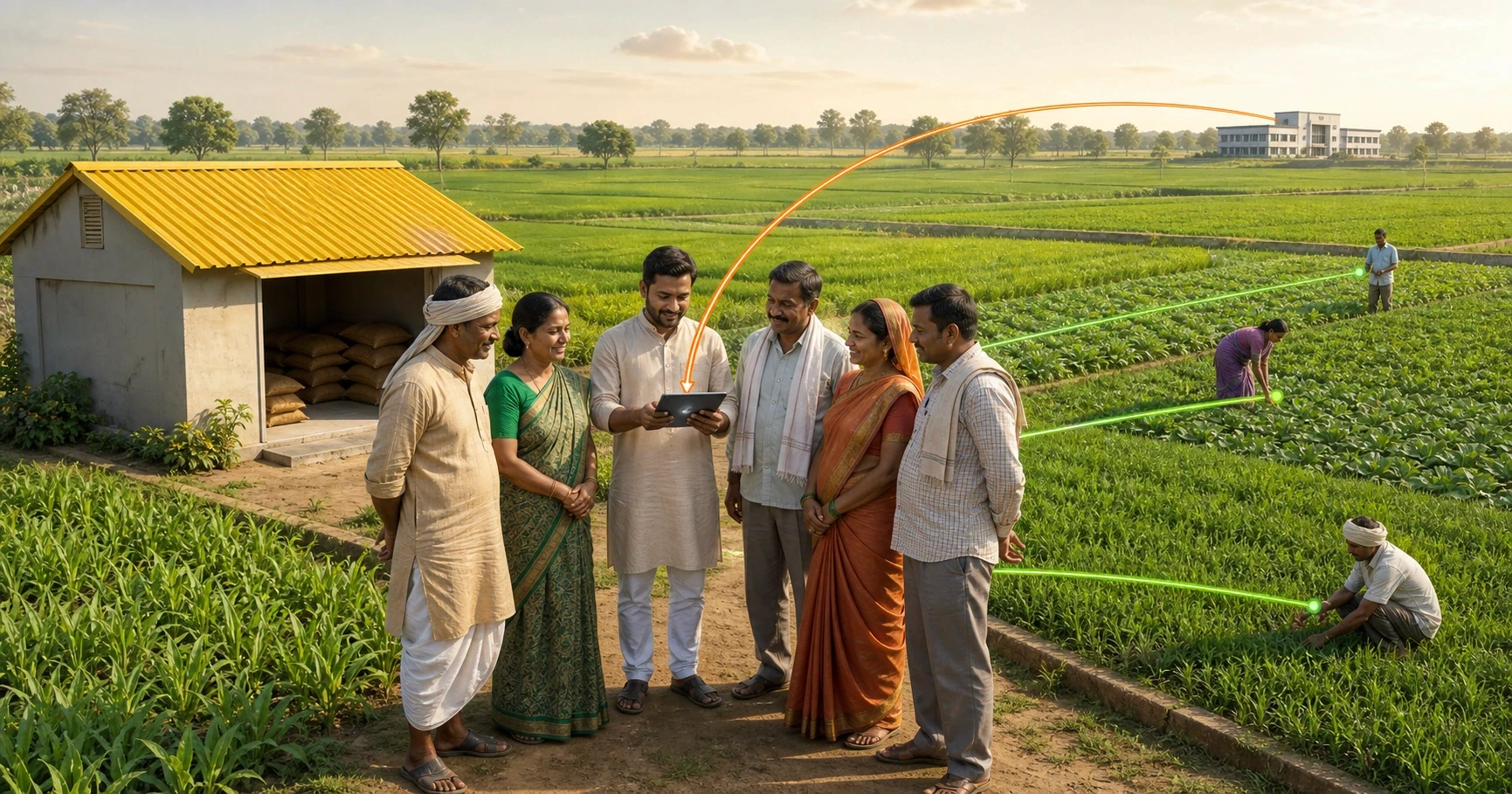
The opportunity is not to bypass FPOs with technology but to equip them with it. Picture the working day of a digitised FPO. The secretary opens a dashboard showing, with each member’s consent, who has unclaimed PM-KISAN instalments and why they are stuck; the FPO’s field coordinator resolves the eKYC issues in a single camp instead of a hundred individual trips to the CSC. The FPO batches its members’ KCC applications with pre-verified documentation, and the bank processes them as a portfolio rather than as strangers. Before the PMFBY deadline, the system generates the enrolment list; the FPO closes it in a week. At harvest, aggregated produce is offered to buyers with verified quality and quantity data, and the negotiating position of three hundred smallholders becomes the negotiating position of one serious counterparty.
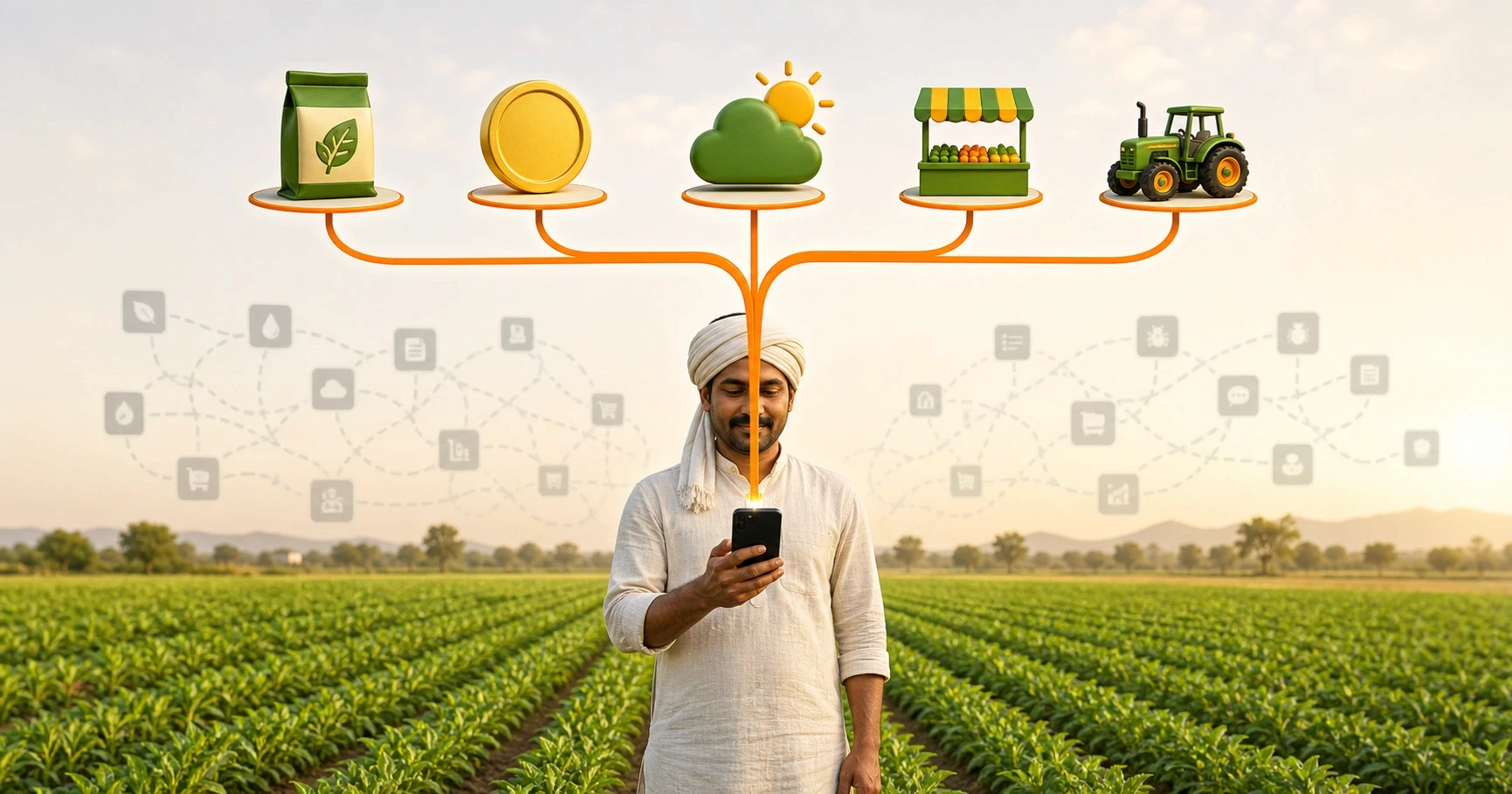
The FPO becomes a more capable version of what it already is; the operating layer gains a trusted, efficient channel; and — not incidentally — the FPO develops new revenue lines and new relevance to its members. Each side supplies what the other lacks. The layer supplies intelligence, connection, and coordination. The FPO supplies trust, presence, and aggregation. Together they cross the last mile that neither could cross alone.
The compounding effect
There is a compounding logic here. As FPOs deliver better outcomes through the layer, membership and trust grow; as trust grows, more farmers are reachable through the same channel; as reach grows, the services become more valuable to provide. The FPO-plus-operating-layer model strengthens with use.
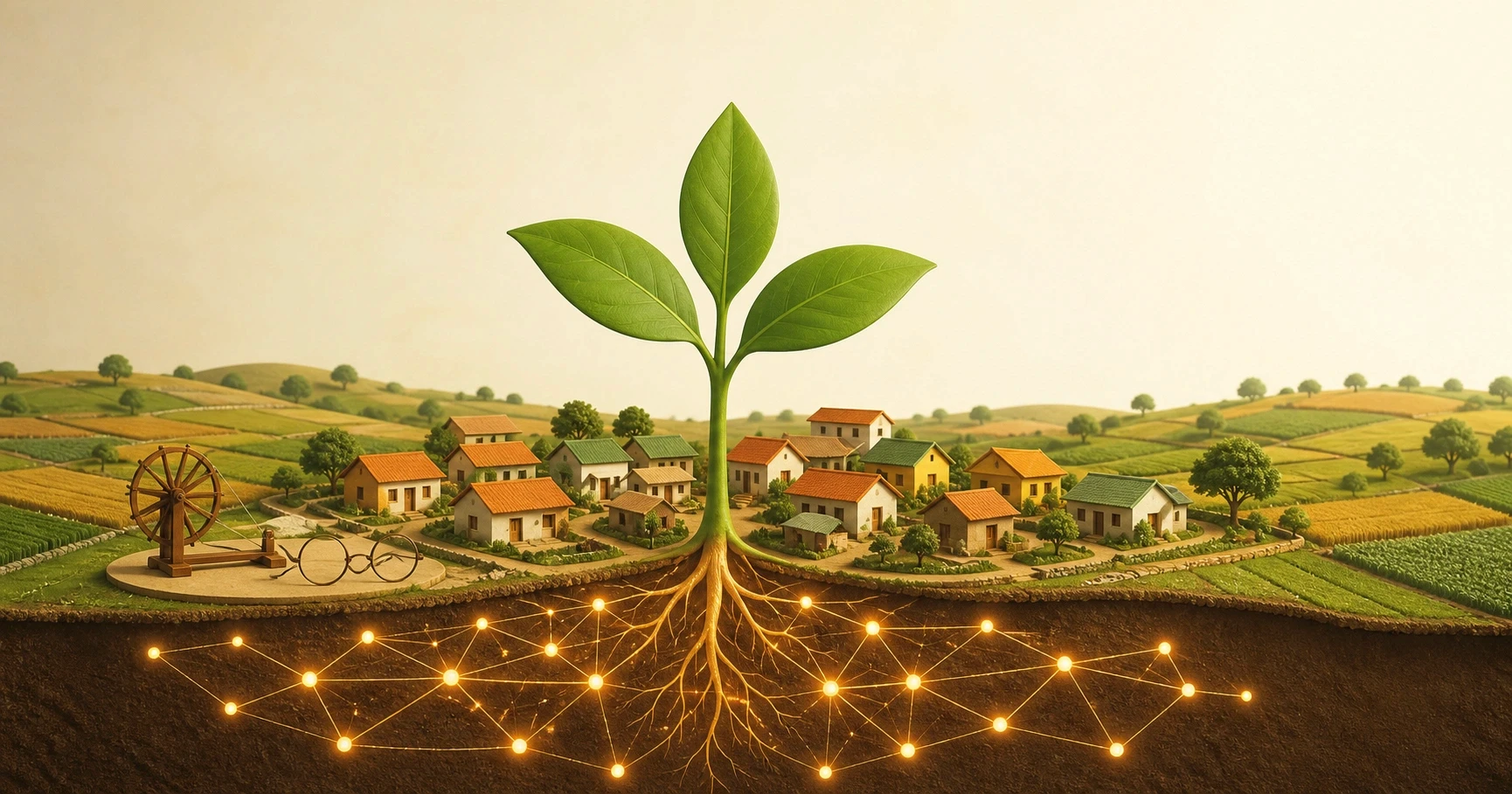
For Gramraj, FPOs are therefore not a channel to be disintermediated but a central part of the distribution strategy — and something more: a commitment to building through Bharat’s own institutions rather than around them. The last mile of rural India will be crossed not by replacing its trusted institutions, but by making them the delivery network they were always positioned to be.