From AgriStack Registry to the Farmer’s Bank Account: Making Public Rails Deliver

AgriStack gives India a verified view of its farmers. Gramraj turns that view into services the farmer actually receives. The two are complements, not competitors — public rails and the private innovation India’s DPI model was designed to invite.
By Ishaan Bhatt · Contributing Writer, Digital Public Infrastructure
AgriStack is among Digital India’s most far-sighted investments — the patient, foundational work of establishing who the farmer is and what can reliably be known about her. The nation has, once again, built the rails first and built them well. This article is about the natural next step the DPI model itself invites: the layer that turns those rails into services delivered.
AgriStack represents one of the most consequential pieces of public digital infrastructure India has built for agriculture: a farmer registry and data architecture that establishes verified farmer identity and supports consent-based sharing of farmer, land, and crop data. It answers the foundational question the sector has struggled with for decades — who is the farmer, and what can be reliably known about her. But a registry, however well built, is not by itself a service. The distance between verified data and a benefit delivered is exactly the distance an operating layer exists to close.
What AgriStack provides
AgriStack rests on three thoughtfully designed public registries — a Farmer Registry issuing verified Farmer IDs, geo-referenced village maps anchoring every plot to a real location, and a Crop Sown Registry kept current through the Digital Crop Survey — together with innovations like the Kisan Pehchan Patra, a digitally verifiable credential a farmer can present for specific land and crops. AgriStack’s contribution, in short, is trust in the data. It gives the ecosystem a way to confirm that a farmer is who she claims to be, to link her to her land and crops, and to share that information under consent. This is the hard, foundational work — the agricultural equivalent of the identity and payment rails that made India’s other DPI successes possible. Without it, every service must verify the farmer from scratch, expensively and inconsistently. With it, verification becomes a shared national capability rather than a private cost.
That is a profound enabler. But it is an enabler, not an end. Verified data sitting in a registry does not, on its own, claim a scheme, prepare a loan file, or connect a farmer to a buyer.
The gap between registry and service — six steps someone must perform
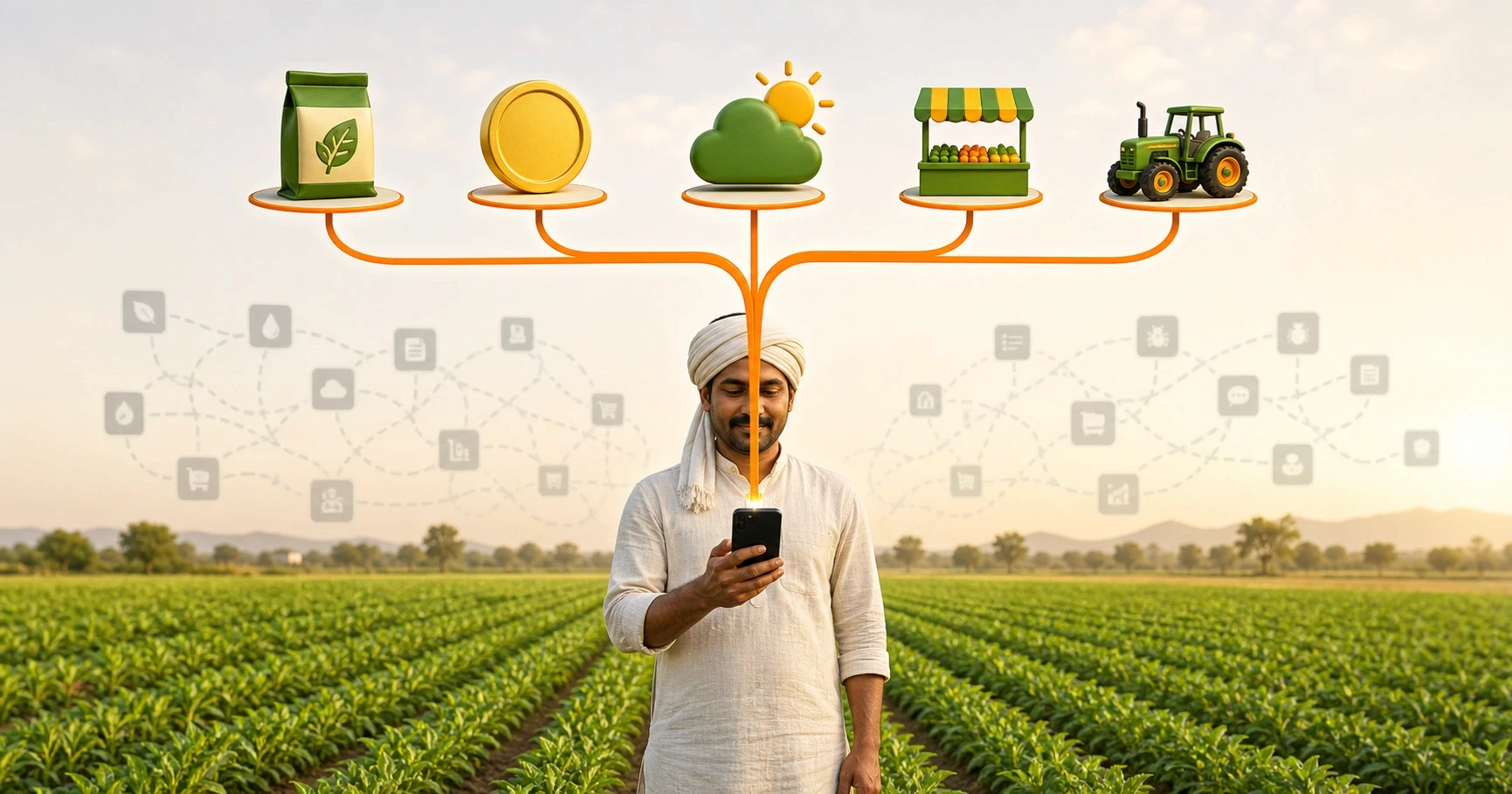
Between a verified record and money in a bank account lie steps someone must perform. Interpret: what is this specific farmer, with this land, this crop, this history, entitled to right now? Match: which schemes, credit products, insurance covers, and buyers fit her — and which deadlines apply? Document: assemble the correct paperwork, correctly, the first time. Apply: file it through the right channel and clear the inevitable exceptions. Transact: see the loan disbursed, the premium paid, the produce sold. Track: confirm the outcome landed, and escalate when it didn’t.
These six steps are where farmers drop off today, and they are not what a registry is designed to do. AgriStack tells you, reliably, who the farmer is and what is true about her. It does not — and is not meant to — walk her from that truth to a benefit in her account.
How the operating layer sits on top
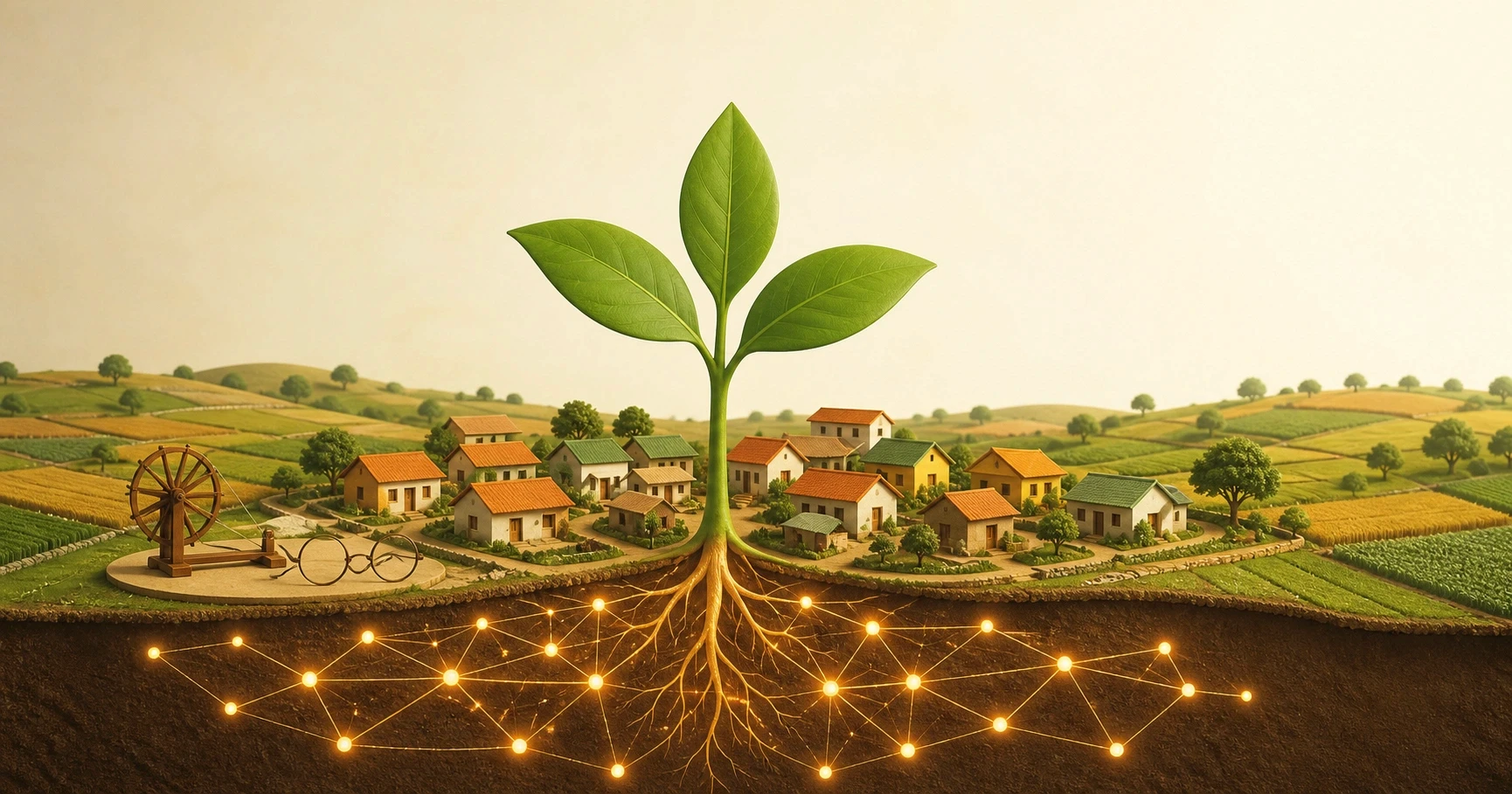
Gramraj is designed to be that layer. It consumes AgriStack’s verified, consented data and applies intelligence to it — determining eligibility, recommending services, preparing documentation, and executing the farmer’s journey end to end, always under her consent. It does not duplicate the registry or compete with it; it builds on it, exactly as private innovation is meant to build on public rails in India’s DPI model — the same relationship UPI apps have to the UPI protocol.
The relationship is architectural. AgriStack is the trusted source of who and what. Gramraj is the operating layer of how. One provides verified truth; the other converts it into outcomes.
From data to delivery
The value of this pairing is that it moves the system from data collection to benefit delivery. A government that has invested in building a farmer registry gains a way to see that investment translate into farmers actually reached, funded, and served. For the farmer, verification stops being something done to her and becomes the foundation of services delivered for her.
The partnership is consent-based, permissioned, and purpose-limited: the operating layer accesses only what a given service requires, only with the farmer’s consent, and logs every access. India has done the hard work of building the rails. The opportunity now — and the responsibility — is to build the operating layer that turns those rails into delivered prosperity, keeping the data verified, consented, and sovereign throughout. That is the work, and AgriStack is the proudly Indian foundation it stands on.