From Registrations to Results: What Governments Actually Gain from a Delivery Layer
Governments have spent a decade collecting farmer data. The return on that public investment is not more data. It is delivery — and delivery needs an operating layer.
By Aditi Deshmukh · Contributing Writer, Policy & Governance
Good governance, at its best, is measurable governance. India’s administrators increasingly ask the most demanding question a public programme can face — not how many were registered, but how many were reached, and why not the rest. Answering it, precisely and accountably, is what a delivery layer exists to do. This article describes that answer.
Public investment in agricultural digitisation has, so far, largely gone into knowing the farmer: registries, databases, identity, records. This was necessary and well spent. But knowing the farmer is a means, not an end. The return the public is owed is not a more complete database; it is schemes claimed, credit disbursed, insurance paid, and produce sold at fair value — the nation’s promises to its annadata, kept and shown to be kept. Between the data a government now holds and the outcomes it seeks lies an operating layer that has not yet been built at scale.
The measurement gap
Ask most agricultural programmes how they are performing and the available metrics describe inputs: farmers registered, portals launched, funds allocated. What is far harder to see is the outcome: of the farmers who were entitled, how many actually received the benefit; of the funds allocated, how much converted into value in a farmer’s hands. This is the measurement gap — a system that can count registrations but struggles to count results. A government cannot manage what it cannot measure, and today it can measure participation far better than impact.
From registration to outcome
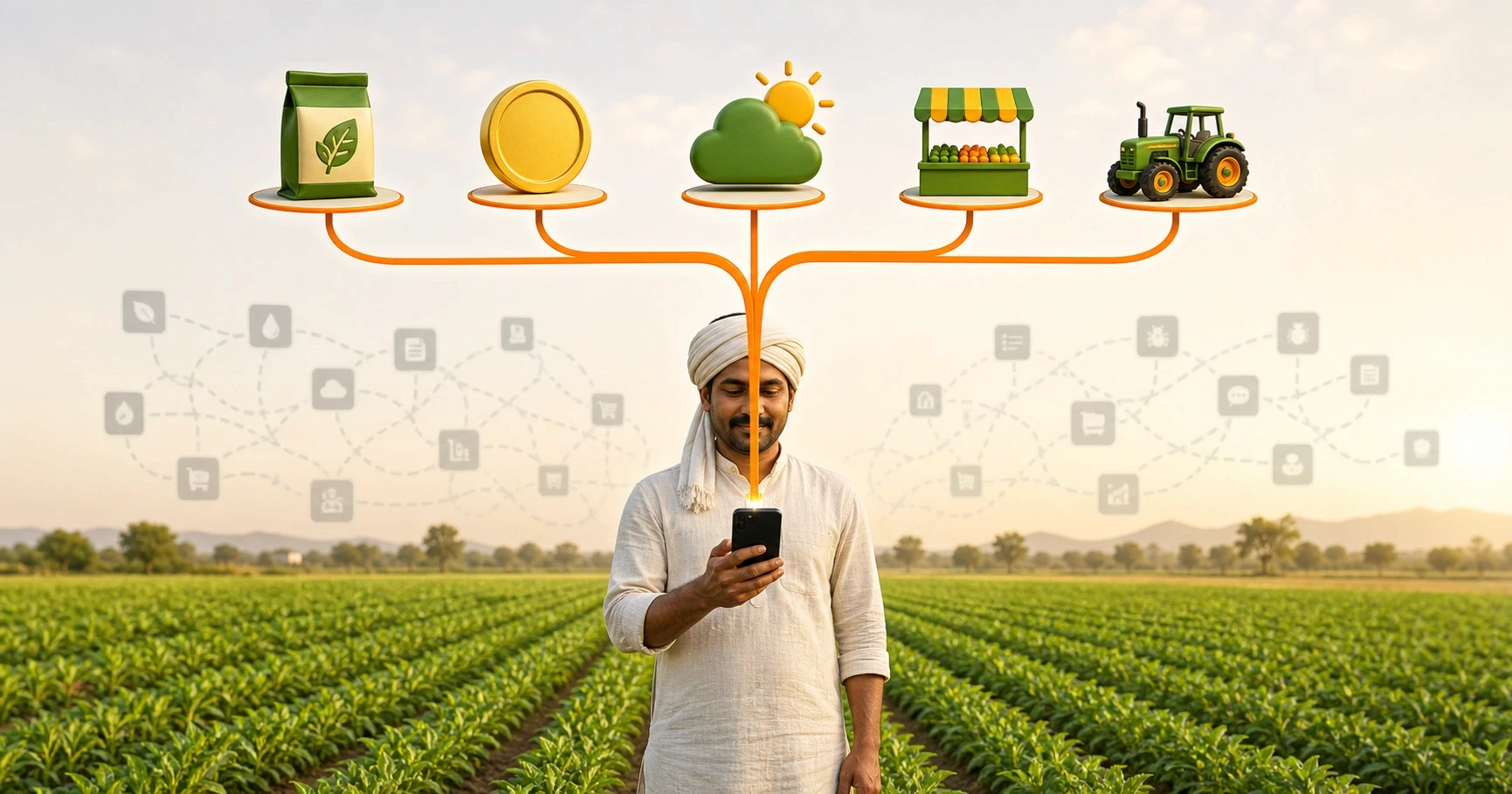
Closing the gap means building the layer that carries a farmer from being in the system to being served by it. That layer determines what each registered farmer is entitled to, guides her through claiming it, executes the transaction, and records the result. Registration becomes the starting point of a delivery process rather than the endpoint of a data-collection one. The verified data the government invested in becomes the input to an engine that produces outcomes and — crucially — makes those outcomes visible.
What the dashboard should show — in concrete terms
The right operating layer gives an administration a view it has never had. Not “farmers registered in the district,” but: of the farmers entitled to PM-KISAN in this block, what percentage received all instalments this year, and what is blocking the rest — eKYC failures, land-record mismatches, dormant accounts — listed and assignable. Not “KCC camps held,” but credit actually sanctioned and disbursed, by tehsil, with average turnaround time. Not “insurance awareness drives conducted,” but PMFBY enrolment against eligible acreage, and claims paid against claims due. Which districts, crops, and farmer categories are being served; which are being missed; where delivery is leaking, and why.
This is the shift from a dashboard of activity to a dashboard of results — from a programme that reports effort to one that demonstrates impact. It also creates a feedback loop: seeing where delivery fails allows a government to fix it, something participation metrics never enable. A district collector who can see that one block’s PM-KISAN saturation lags because of a specific land-record issue can solve that issue this quarter.
The accountability dividend
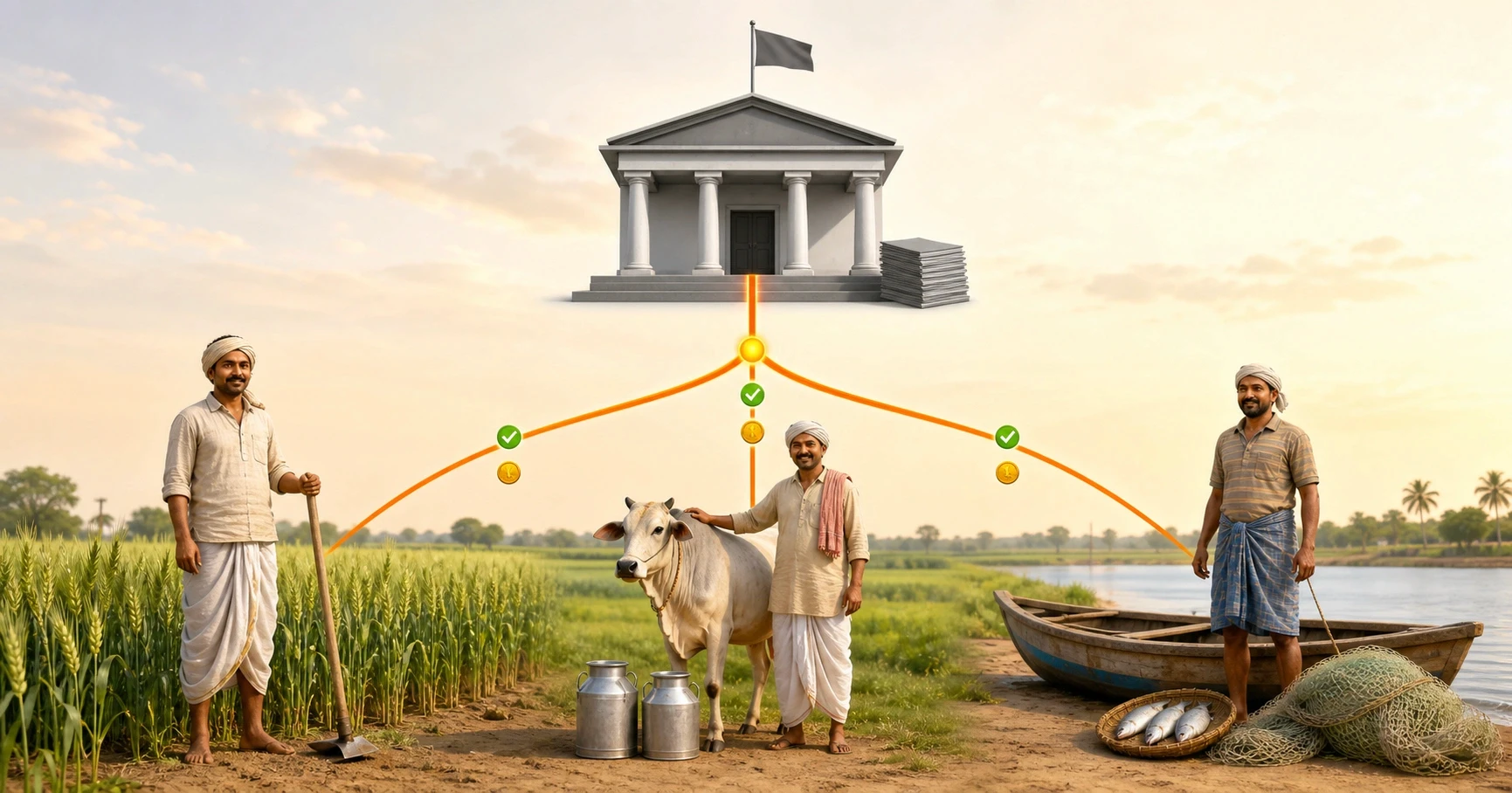
There is a further return, and it may be the most valuable. A delivery layer that records outcomes under consent, with an auditable trail, gives government accountability it can stand behind. Public spending on agriculture becomes traceable to results. Claims of benefit delivered can be substantiated — to legislatures, to auditors, to citizens. Leakage becomes visible and therefore addressable. Good governance becomes demonstrable governance.
For a government, this is the payoff that justifies the entire investment in digitisation. The registries and identity systems were the foundation; the operating layer is what finally makes them deliver — measurably, accountably, at national scale. Gramraj is built to be that layer: the bridge from the data India has collected to the outcomes India seeks, with the farmer served and the delivery proven.